If you’ve watched enough Korean dramas, you’ve probably noticed a pattern. Someone is always the heir to a massive company. And someone is always fighting over shares.
Welcome to the world of fictional chaebols: the fake-but-feel-real companies that quietly run the K-drama universe.
In almost every Korean drama, these fake companies decide who gets power, who gets crushed, and who mysteriously “falls from a building” after a shareholder meeting.
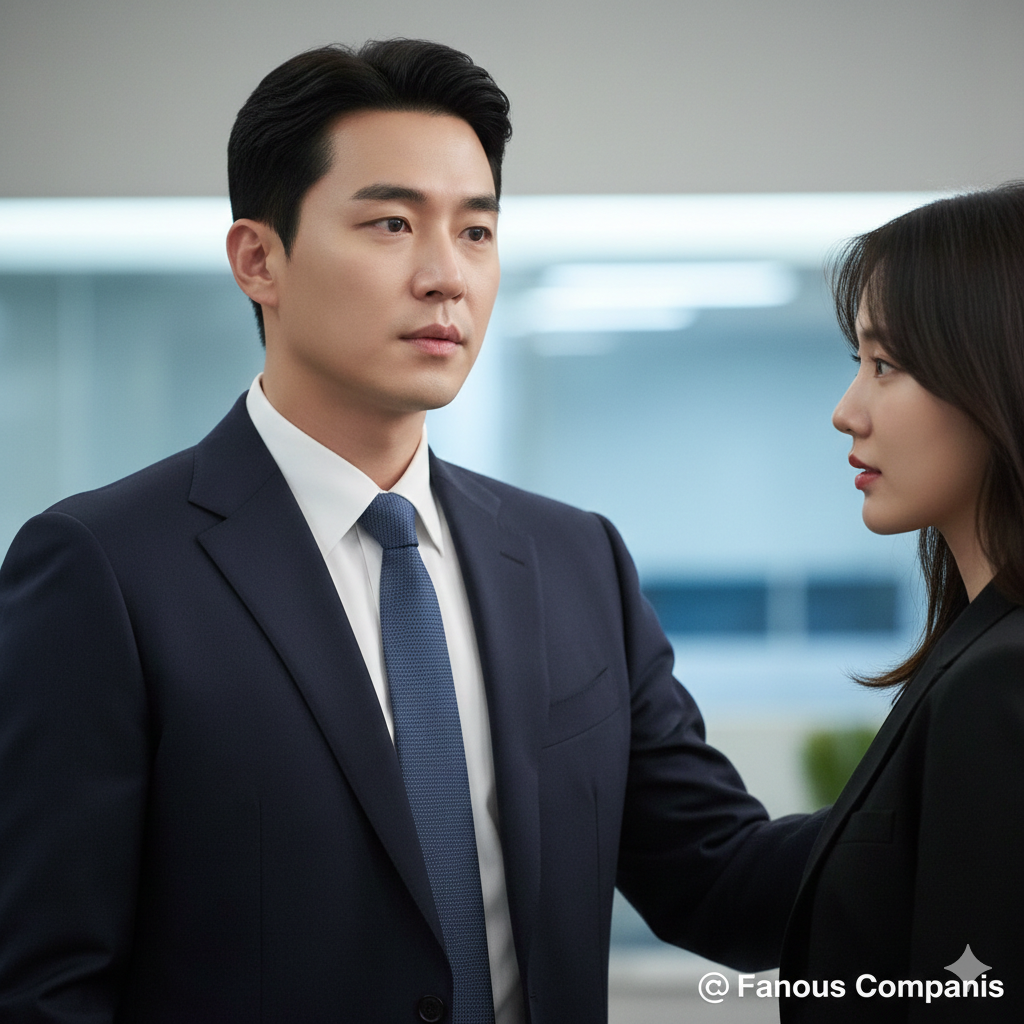
Below are some of the most famous fictional companies in Korean dramas, what they do, and why they’re so unforgettable.
Sunyang Group
Drama: Reborn Rich
Industry: Electronics, finance, retail, basically everything
Vibe: Cold, powerful, allergic to accountability

For me, Sunyang Group is the gold standard of fictional K-drama conglomerates. I love how it plays the succession and power game.
This is the kind of company that owns your phone, your apartment, your bank, and probably your soul. In Reborn Rich, Sunyang grows from a small trading business into a national powerhouse, all while the founding family turns succession into a blood sport.
What I love about Sunyang is how detailed the corporate politics are. Boardroom votes matter. Economic crises matter. Timing stock matters.
The K-Drama Fashion Trends You Can Incorporate into Your Daily Life
Shinhwa Group
Drama: Boys Over Flowers
Industry: Everything from hospitals to schools to global business
Vibe: Untouchable royalty
Boys Over Flowers is a legendary K-drama, so is the biggest company featured in the drama, Shinhwa. I’d say Shinhwa Group is the OG fictional conglomerate. It’s so powerful that governments feel optional.
The company owns elite schools, hospitals, luxury brands, and enough influence to erase scandals overnight.
And unlike othe dramas where companies show business power, Shinhwa’s real role in the story isn’t business. Rather, it’s class. It represents an elite world where rules don’t apply and where love across social lines is treated like a corporate risk.
Jeguk Group
Drama: The Heirs
Industry: Construction, education, finance
Vibe: Old money with emotional damage
Jeguk Group (literally meaning “Empire”) is all about legacy.
In the Heirs, Elite schools are part of the business ecosystem at Jeguk, designed to groom future executives and strategic marriage candidates.
Jeguk is obsessed with bloodlines, image, and control. Love is a negotiation.
What makes Jeguk memorable is how casually cruel it is. There was no yelling or overly chaotic environments – rather, just quiet pressure until people break.
20 Best K-Drama Soundtracks That Will Give You Goosebumps
Babel Group
K-Drama: Vincenzo
Industry: Pharmaceuticals, construction
Vibe: Completely unhinged
Babel Group is what happens when a conglomerate fully embraces villain mode.
On paper, it’s a pharmaceutical and construction giant. In reality, it’s a criminal organization wearing a suit. Illegal testing, bribery, intimidation, murder – all in a day’s work.
Babel doesn’t hide its corruption well. In fact, it doesn’t need to, because it’s rich enough to believe consequences are optional.
What makes Babel terrifying is how childish its leadership is. Immature, impulsive, and violent, yet protected by wealth (and of course, all added to the beauty of Vincenzo). It’s a dark satire of unchecked power, and honestly, one of the most fun villains in K-drama history.
Jangga Group
Drama: Itaewon Class
Industry: Food and restaurant chains
Vibe: Arrogant, outdated, emotionally bankrupt
Jangga Group proves you don’t need skyscrapers to be toxic.
This is a food empire built on rigid hierarchy, blind obedience, and the belief that success justifies cruelty. The founder treats employees like disposable tools and mistakes dominance for leadership. So the real conflict was beyond money – rather it was more on values.
Korean Dramas with the Best Fashion Styles: Copy these K-drama Fashion Moments
Cheong-ah Group
Drama: The Penthouse
Industry: Luxury real estate, elite arts education
Vibe: New money chaos
Cheong-ah Group is obsessed with prestige where apartments are status symbols, schools are weapons, and children are seen as investments.
This company exists to show how wealth mixed with insecurity can become dangerous. Parents will lie, cheat, manipulate, and destroy lives just to maintain their place in the hierarchy.
Cheong-ah isn’t subtle. It’s loud, messy, and dramatic. And somehow, that makes it one of the most honest portrayals of status obsession in K-dramas.
Cheong-A Group
Drama: Money Flower
Industry: Finance, manufacturing
Vibe: Elegant on the outside, rotten inside
Different spelling, different nightmare. Cheong-A Group is smoother than most fictional chaebols. Everything looks refined, calm, and professional. But underneath is a family built on manipulation and betrayal.
This drama focuses on loyal employees who know too much and heirs who understand too little. Money doesn’t bring control here. It brings paranoia. Cheong-A feels like a warning: the quieter the company, the more secrets it’s hiding.
Mirae Group
Drama: My Demon
Industry: Food and beverage, lifestyle brands
Vibe: Modern, glossy, quietly political
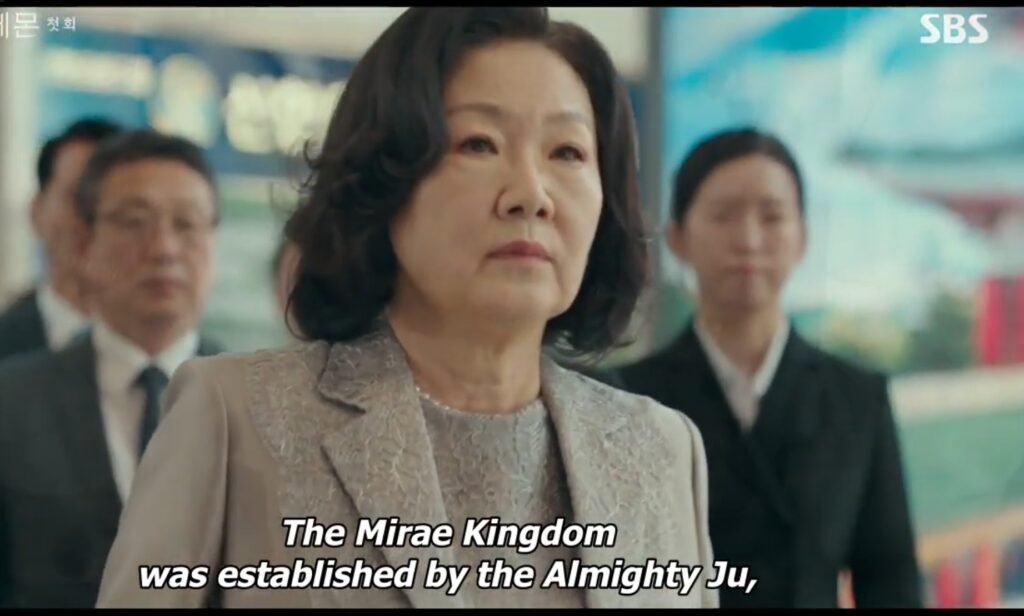
Mirae Group represents the newer generation of fictional conglomerates.
It’s stylish, public-facing, and brand-conscious. However, behind the aesthetics are the same old problems: succession fights, gender bias, and family members waiting for you to fail.
The drama also highlights how being competent isn’t enough when you’re a woman in a powerful family.
Haneul Group
Drama: Cinderella and the Four Knights
Industry: Multi-sector conglomerate
Vibe: Rich grandpa chaos
Haneul Group exists for one purpose: to throw a regular person into a nest of rich heirs and see what happens.
The company itself is massive, but the story focuses on inheritance rules, marriage expectations, and the idea that love can “fix” spoiled heirs. It’s lighter than most chaebol dramas, but the core message remains the same: wealth complicates everything, especially family.
15 Best K-Dramas for Beginners on Netflix
Seungjin Group
Drama: Kill Me, Heal Me
Industry: Manufacturing, entertainment
Vibe: Trauma with a logo
Seungjin Group is one of the darkest fictional conglomerates. Behind the polished image is a family history of abuse, silence, and emotional damage so severe it literally fractures the heir’s identity.
This company represents the cost of prioritizing reputation over humanity. Profits are protected. People are not. It’s uncomfortable, heartbreaking, and unforgettable.
Queens Group
Drama: Queen of Tears
Industry: Department stores, retail, luxury goods
Vibe: Ice-cold elegance with a side of emotional warfare
Queens Group is old money, polished, and ruthless in the most refined way possible.
This is a luxury retail empire that looks flawless from the outside and emotionally frozen on the inside. The family treats vulnerability like a disease and affection like bad PR.
What makes Queens Group compelling isn’t loud villainy. It’s quiet emotional neglect, strategic marriages, and the belief that love is something you outgrow once you inherit power..
Queens Group / Seri’s Choice
Drama: Crash Landing on You
Industry: Fashion, beauty, lifestyle brands
Vibe: Self-made brilliance trapped in a rich family mess
This one’s interesting because it splits into two layers.
Queens Group is the massive conglomerate run by Yoon Se-ri’s family, complete with the usual succession tension and siblings who smile politely while sharpening knives.
Seri’s Choice, on the other hand, is Se-ri’s own successful fashion and lifestyle company. It’s stylish, modern, and built on her actual competence, not just her last name.
That contrast is the point. The drama quietly asks: Is inherited power worth more than earned success? Spoiler?: the family doesn’t think so, and that’s where the drama lives.
How to Learn Korean by Watching K-Dramas: Ultimate Guide
Go Food
Drama: Business Proposal
Industry: Food, retail, consumer goods
Vibe: Surprisingly healthy… for a chaebol
Go Food (The parent company, founded by Kang Da-goo, is known as Geumhwa Group) deserves mention simply because it doesn’t immediately feel like a crime scene.
It’s a large food conglomerate with a relatively functional leadership structure and fewer screaming boardroom scenes than usual. The conflict is still there, but it’s softer, more modern, and slightly less traumatic.
Go Food represents the rom-com version of a chaebol: powerful, rich, but mostly there to enable romance instead of emotional devastation.
Final Thoughts
Fictional companies in K-dramas aren’t just settings. They’re characters. They create the pressure, shape the villains, and explain why everyone is miserable in luxury apartments.
Whether it’s a food chain, a pharma giant, or a mysterious empire that owns half the country, these fake companies help K-dramas explore very real questions about power, class, and control.
And let’s be honest: no matter how many times we say “eat the rich,” we’re still going to watch every boardroom scene. Because deep down, we love a good succession war.